Taking the heat
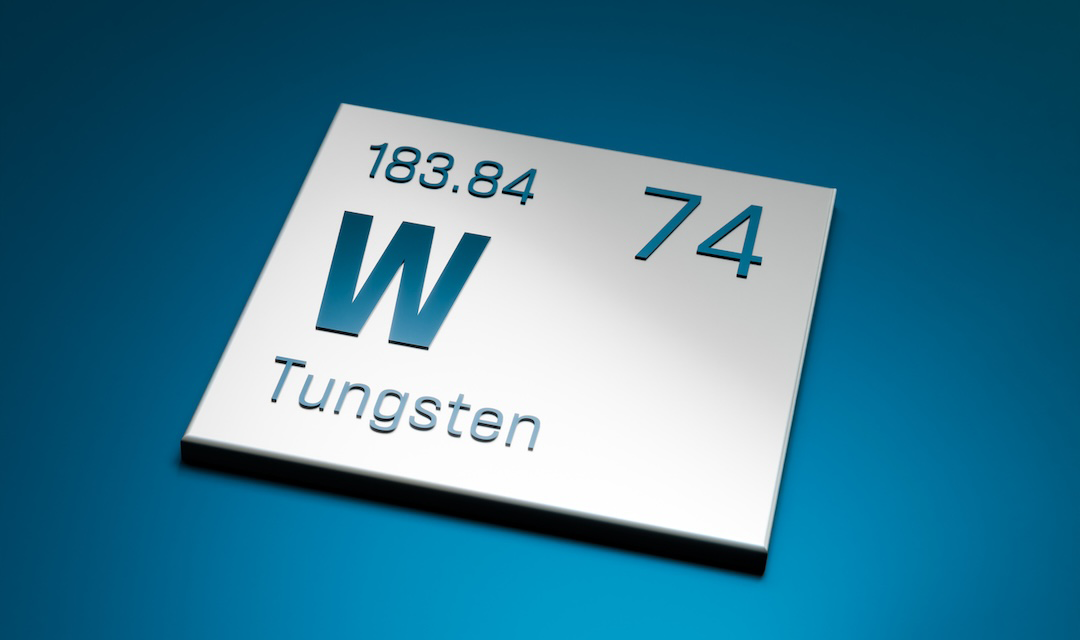
Tungsten withstands extremely hot temperatures but can crack like glass at room temperature. Carnegie Mellon researchers used AI to narrow down potential alloys to add some stretch to this super metal.
Known for high density, durability, and tensile strength, tungsten is an overachiever among metals. Having the highest melting point of any non-alloyed metal (3,422 degrees Celsius), it is ideal for use in extreme environments like fusion reactors and rocket engines.
With its superpower properties, tungsten can be an ideal material for manufacturing complex, high performing parts for the energy and aerospace industries. Unfortunately, it has a serious weakness: a glass-like brittleness at room temperature. When used in additive manufacturing, tungsten shrinks and cracks during the cooling process.
Since the advantages of 3D printing metal are so significant (making intricate designs, offering fast prototyping, and reducing material waste), they justify finding a way to make tungsten work. Researchers at Carnegie Mellon University’s Department of Chemical Engineering sought a solution to this challenge.
Machine learning finds the recipe
Identifying materials to mix with tungsten that counteract its brittle nature could take years in the laboratory, testing thousands of potential combinations to find the perfect formula. While physics-based simulation can narrow down the possibilities, it requires significant time and computational power.
The research team instead turned to a tool called machine learning interatomic potentials—or MLIPs—to speed up this process. MLIPs are mathematical models that map atomic structures. 10,000 times faster than physics simulations, they can deliver highly accurate predictions of new, unseen atomic configurations.
After this machine learning tool had narrowed down the best potential alloys, the researchers applied the physics-based simulation called Density Functional Theory to study the alloys’ elastic properties on the atomic level.
Now with only six possible alloys, the researchers collaborated with Assistant Professor Mohadeseh Taheri Mousavi and Professor Bryan Webler of the Materials Science and Engineering Department, and the university’s Manufacturing Futures Institute to perform physical experiments. When they 3D printed the alloys, two of the specific “recipes” (using different concentrations of tungsten, tantalum, and niobium) performed well without cracking. This confirmed the accuracy of the recommendations.

The additive manufacturing method used to print the tungsten alloys.
It comes down to electrons
Wanting to explore more deeply what was happening at the atomic level, the researchers then turned to another collaboration, this time with Michael Widom, professor of physics in the Mellon College of Science.
A material’s ability to stretch or deform without breaking—ductility—depends on the strength and flexibility of the bonds between its atoms. When tantalum and niobium were added to tungsten, the electrons bonded together in a less rigid way. This caused a 50-60% jump in ductility, which allowed for an alloy that was more workable for the 3D printing process. Tantalum, it turned out, played a larger role than niobium.
“Think of the electrons as students getting on a bus, and the seats on the bus represent the states where the electrons can go,” explained Kareem Abdelmaqsoud, a chemical engineering Ph.D. student. “If ten students get on the bus and there are only ten seats available, the students have less flexibility to move around compared to the bus that has 100 seats available.”
The multidisciplinary findings were published in the journals Computational Materials Science and Physical Review Materials.
“While tungsten and tantalum are widely-studied, our work was unique in that it combined machine learning models with Density Functional Theory (DFT) and experiments,” said John Kitchin, professor of chemical engineering. “The results provide a strong foundation for further research into high-performing materials for 3D printing.”