
New faculty: 2026

Victor Alves
Assistant Professor, Chemical Engineering
Victor Alves is an assistant professor in the Department of Chemical Engineering at Carnegie Mellon University. His research lies at the intersection of process systems engineering (PSE), optimization, and machine learning (ML). He develops mathematical and computational methods that combine physics-based models with data-driven methods to improve the design, operation, and control of complex, industrial-scale systems.
His work in hybrid scientific machine learning combines first-principles engineering models with ML components that learn unknown or not fully understood process dynamics from available data, improving predictive accuracy while preserving physical laws, engineering constraints, and interpretability. His research also includes generative modeling, model-based design of experiments, uncertainty quantification, process operability, and plantwide control. He also studies the use of large language models (LLMs) to orchestrate workflows for process modeling, optimization, and control. Alves develops open-source scientific software used by the PSE community, including Opyrability and Metacontrol for process operability and plantwide control, respectively. He applies his research to chemical and advanced manufacturing, biopharmaceutical production, energy, and petrochemical systems, often in collaboration with industrial and federal research partners.
Alves earned his Ph.D. in chemical engineering from West Virginia University in 2024 and his B.S. (2017) and M.S. (2020) in chemical engineering from the Federal University of Campina Grande in Brazil. Before joining the Carnegie Mellon faculty, he was a postdoctoral fellow in the Department of Chemical Engineering at CMU, where his research focused on hybrid modeling and model-based design of experiments for biopharmaceutical processes, differentiable programming, and dynamic optimization. He also has industrial experience in petrochemical process engineering and in developing software for plantwide process control for the oil and gas sector.

Drew Beauchamp
Assistant Professor, Biomedical Engineering, Neuroscience Institute
James "Drew" Beauchamp is an Assistant Professor of Biomedical Engineering at Carnegie Mellon University, with a joint appointment in the Neuroscience Institute. He received his Ph.D. in Biomedical Engineering (Neural Engineering) from Northwestern University, where he studied how brainstem neuromodulatory inputs to spinal motoneurons contribute to deficits in human motor function, working with Julius Dewald and CJ Heckman. He then completed postdoctoral training in Mechanical Engineering with Doug Weber at Carnegie Mellon University, where he investigated neuromodulatory stimulation for pain treatment. He also holds a B.S.E. and M.S. in Biomedical Engineering from Arizona State University. Dr. Beauchamp’s lab develops and applies neurotechnology to study the central nervous system from its output layer, using spinal motoneurons to estimate upstream signaling within spinal, cortical, and subcortical structures. The group asks how people control movement, what changes in neural pathology and injury, and whether function can be restored using neurotechnology.

Sarah Cen
Assistant ProfessorAssistant Professor, Electrical and Computer Engineering, Engineering and Public Policy
Sarah H. Cen is an assistant professor of Electrical & Computer Engineering and Engineering & Public Policy at Carnegie Mellon University. Cen’s research lies at the intersection of machine learning, statistics, economics, law, and public policy. Her recent work includes projects on AI audits, AI supply chains, social media regulation, algorithmic fairness, causal inference under network interference, individual rights in the age of AI, and procedural due process for AI-driven decisions. She was previously an HAI postdoctoral researcher at Stanford, jointly affiliated with Stanford Law School's RegLab and the Department of Computer Science, working with Daniel Ho and Percy Liang.
Cen earned her Ph.D. in electrical engineering and computer science at MIT, advised by Aleksander Mądry and Devavrat Shah; a master’s in robotics at Oxford University with Paul Newman, where she worked on autonomous vehicles; and a BSE in mechanical engineering at Princeton with Naomi Leonard, where she studied control systems.
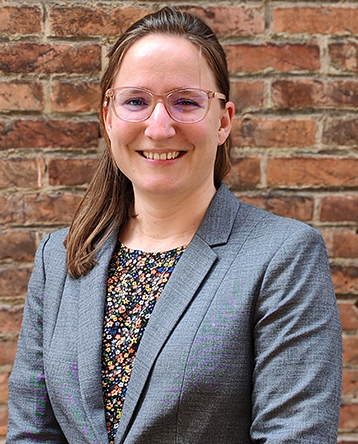
Frederike Düembgen
Assistant Professor, Mechanical Engineering
Frederike Dümbgen is an assistant professor in the Department of Mechanical Engineering with a courtesy appointment in the Robotics Institute.
Dümbgen’s research goal is to improve the efficiency and safety of robots and, more generally, engineered systems, acting in the physical world for and with humans. She tackles this challenge by building on advances in optimization and artificial intelligence, with a focus on creating scalable and certifiably optimal methods. In doing so, she aims to create a path toward principled, solid foundations for the next generation of robotics and intelligent machines that can scale to solve the world’s pressing problems, be it in design and manufacturing, autonomous vehicles, or assistive technology.
Dümbgen previously worked as a researcher in the Willow team of Inria Paris, where she worked on global optimization for robotics. Before joining Inria, she spent two years as a postdoctoral fellow at the Robotics Institute of the University of Toronto. Frederike holds a Ph.D. in computer and communication sciences from École Polytechnique Fédérale de Lausanne (EPFL), Switzerland, and a B.Sc. and M.Sc. in mechanical engineering from EPFL, with a minor in computational science and engineering. She performed her master’s thesis at the Autonomous Systems Lab of ETH Zürich and gained experience in industry as an intern at Disney Research and ABB, among others.

Jason Guo
Assistant Professor, Biomedical Engineering
Jason Guo is an Assistant Professor in Biomedical Engineering. His research focuses on mapping the organization of diseased tissue as a blueprint for engineered models and developing methods to track how engineered tissues grow, remodel, and respond over time. He received his B.S. in Biomedical Engineering from Northwestern University and his Ph.D. in Bioengineering from Rice University, where his doctoral research centered on the spatial patterning of biomaterials for osteochondral repair. He went on to complete a postdoctoral fellowship at Stanford University, where he developed spatial biology tools to study lung disease.

Olivia Hsu
Assistant Professor, Electrical and Computer Engineering
Olivia Hsu is an assistant professor at Carnegie Mellon University in the Department of Electrical and Computer Engineering and, by courtesy, Computer Science. Previously, she received her Ph.D. from Stanford University, advised by Professors Kunle Olukotun and Fredrik Kjolstad.
Her vision is a world where domain-specific hardware is used efficiently, easily, and to its full potential. Hardware adoption should be limited by its design, not its programming system, and new architecture ideas should be ready to use well at the time of its introduction. Toward this goal, she works on hardware and software systems that efficiently run complex, data-dependent applications (think sparse and dynamic ML workloads) on next-generation, domain-specific hardware (think heterogeneous, distributed, and accelerator architectures). During her Ph.D., she worked on one instance of this problem by studying Programming Systems for Sparse Accelerators.
Her research interests broadly lie at the intersection of computer architecture, programming systems, compilers, programming languages/models, and digital circuits/VLSI.
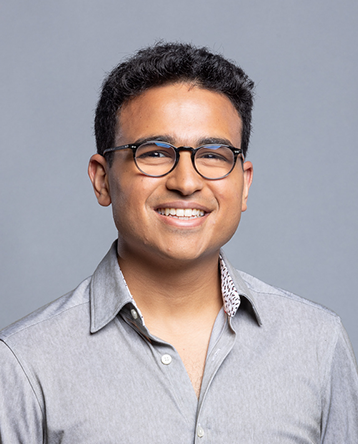
Andrew Ilyas
Assistant Professor, Electrical and Computer Engineering, Software and Societal Systems Department
Andrew Ilyas is an incoming assistant professor at CMU, starting Spring 2026. Previously, he was a Stein Fellow at Stanford Statistics and a Ph.D. student MIT, where he was fortunate to be advised by Costis Daskalakis and Aleksander Madry and supported by an Open Philanthropy AI Fellowship. Ilyas attended MIT for undergrad, majoring in CS and in Math. Outside of research, I enjoy playing soccer and table tennis.
Ilyas's goal is to uncover general principles that describe and predict the behavior of ML systems—ideally enabling predictably reliable future systems. This goal entails combining statistical tools with large-scale experiments to precisely understand the ML "pipeline," from training data (and the way we collect it), to learning algorithms, to deployment. He also likes thinking broadly about (human) trust in AI systems.
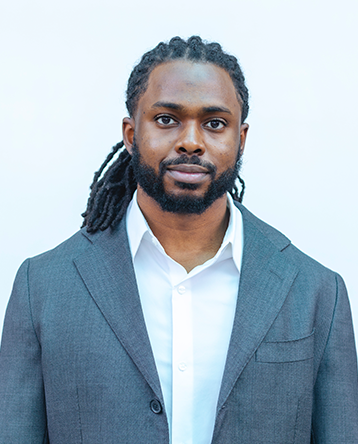
Stewart Isaacs
Assistant Research Professor, CMU-Africa
Stewart Isaacs is an assistant research professor at Carnegie Mellon University Africa, where he directs the Decentralized Energy and Atmosphere Lab (DEAL).
His research seeks to improve the performance of decentralized energy systems by studying interactions between energy systems and the atmosphere. To do this, his group takes a “full stack” approach: developing data and sensing systems to characterize energy-atmosphere interactions, feeding this data into computational models to capture the reciprocal effects between energy and atmospheric aerosols and emissions, and using these models to design energy technologies suited to local contexts. This work draws on techniques from remote sensing, atmospheric science, and energy systems engineering to generate the insights and tools needed for establishing reliable and context-appropriate systems.
Isaacs earned his B.S. in mechanical engineering from Stanford University and his M.S. and Ph.D. from MIT’s Department of Aeronautics and Astronautics. He previously served as an inaugural Archer Cornfield Teaching Fellow at Ashesi University, an instructor at MIT’s D-Lab, and an Engineering Excellence Postdoctoral Fellow at MIT.

Ryan Johnson
Associate Professor, Mechanical Engineering
Ryan F. Johnson is an associate professor in the Department of Mechanical Engineering at Carnegie Mellon University.
His research focuses on predictive computational modeling of propulsion and reacting-flow systems, with interests spanning computational fluid dynamics, chemical kinetics, GPU-enabled high-performance computing, and embedded machine learning. He develops scalable prediction capabilities for complex, multiscale problems, with the goal of enabling accurate simulation of real propulsion and energy devices.
Before joining Carnegie Mellon, he was a scientist and aerospace engineer at the U.S. Naval Research Laboratory in Washington, DC, where he led efforts in high-speed propulsion modeling. He also held a visiting scholar appointment at Stanford University, where he worked on problems at the intersection of high-performance computing, CFD, and chemical kinetics.
Johnson received his Ph.D. from the University of Virginia in 2014 under the supervision of Professor Harsha Chelliah. He is a recipient of the Presidential Early Career Award for Scientists and Engineers (PECASE).

Michelle Li
Assistant Professor, Biomedical Engineering
Michelle M. Li is an Assistant Professor in Biomedical Engineering. Her research focuses on developing novel medical AI algorithms that generate personalized outputs based on the contexts in which they operate, dynamically adapting their reasoning to new cell types and tissues, medical specialties, patient populations, experimental and clinical workflows, and clinical roles. These algorithms are grounded in biological and medical principles to minimize the risk of contextual error, where predictions appear reasonable but fail to account for critical context-specific information. Dr. Li’s lab aims to build models that seamlessly integrate across experimental and clinical workflows, from modulating cellular trajectories to diagnosing rare and complex diseases to inferring treatment response.
Li was a Berkowitz Postdoctoral Research Fellow at Harvard Medical School. She earned her Ph.D. in Biomedical Informatics from Harvard University, and her B.S. in Mathematical and Computational Science from Stanford University. Her research has been recognized through the National Science Foundation Graduate Research Fellowship, the Albert J. Ryan Fellowship, the Harold M. Weintraub Graduate Student Award, and the UCLA Emerging Genomic Scientist Fellowship. Dr. Li is a founding organizer of the Learning on Graphs Conference, the AI for Drug Discovery and Development Workshop, and the Symposium on AI for Learning Health Systems.