Study tour showcases industrial innovation in Southern Africa
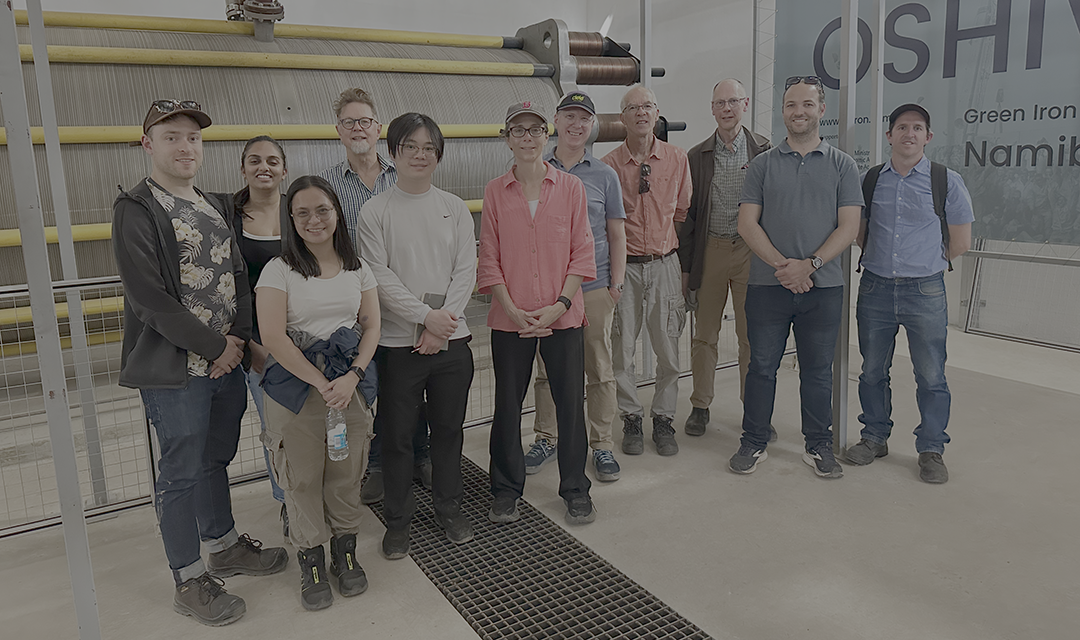
Faculty and students alike saw the value in observing how iron and steel production methods reflect the unique resources and capabilities in Southern Africa.
In May 2026, academic and industry partners in the Industrial Decarbonization Analysis, Benchmarking, and Action (INDABA) Partnership, a global network led by Carnegie Mellon University, embarked on a study tour of iron and steelmaking, energy, and ferroalloy production sites in Southern Africa.
The goal of the study tour was to develop a shared understanding of the opportunities and challenges facing the industry by visiting emerging production sites for decarbonized ironmaking and established steel and ferrochrome facilities in the region. In South Africa, economic isolation during the Apartheid era encouraged self-sufficiency and technological experimentation in iron and steel and other industries. This history of experimentation was apparent as the group visited diverse sites and heard from industry professionals about the region’s workforce, access to resources, and the role of policy.
“The spirit of trying new things is very much alive there,” said Chris Pistorius, professor of materials science and engineering and co-director of the Center for Iron and Steelmaking Research (CISR) at CMU. Such innovations included developing ironmaking methods that don’t use coke, an emissions-intensive input.
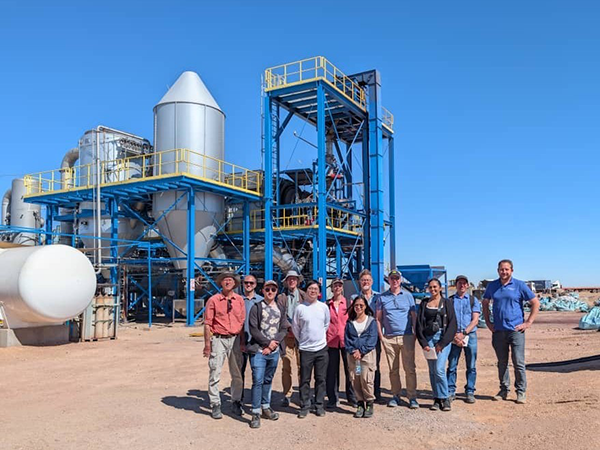

The group also toured the HyIron plant, where direct reduced iron (DRI) is produced using 100 percent hydrogen in the Namibian desert. Hydrogen offers a very low-emissions alternative to coal-based DRI production and is often regarded as a promising technology that hasn’t yet seen widespread global deployment. At HyIron, the technology is already in place.
The INDABA Partnership was established in 2023 with support from the National Science Foundation to support decarbonization of iron and steelmaking while meeting increased demand worldwide. The initiative is co-chaired by Pistorius and Valerie Karplus, a professor of engineering and public policy and associate director of the Scott Institute for Energy Innovation.
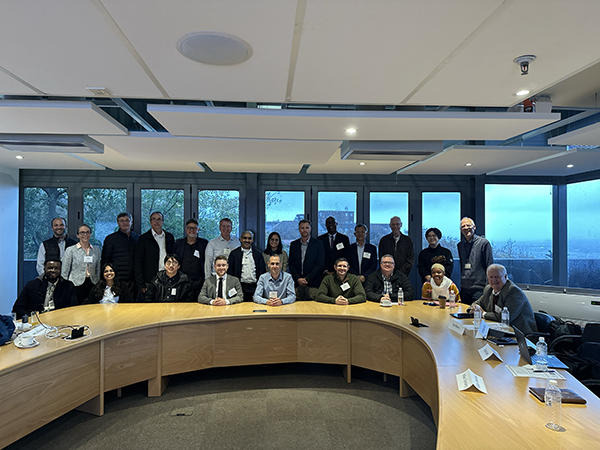
Joining Karplus and Pistorius from CMU were Peter Adams, professor of engineering and public policy; Quantum Zhuo, a recent Ph.D. graduate in materials science and engineering; and Zaina Merchant, a Ph.D. student in engineering and public policy. Academic collaborators involved in the trip included University of Cape Town, which is based in South Africa and hosted a technical conference during the tour; China’s Tsinghua University; TU-Dortmund in Germany, and the Leibniz Centre for European Economic Research, both based in Germany. Representatives from industry partners ArcelorMittal South Africa, Stegra, and Tata Steel also attended the tour.
Faculty and students alike saw the value in observing firsthand how iron and steel production methods reflect the unique resources and capabilities in Southern Africa, a natural complement to coursework in materials science, engineering, and public policy. During the tour, the team discussed extensively to what extent solar photovoltaic and wind power could support the energy needs of industry, for instance, through direct process electrification or hydrogen production. At the same time, established industries facing challenging economic circumstances were focused primarily on survival and aligned decarbonization opportunities.
The message we heard is, if you’re going to decarbonize, you also need viable iron and steelmaking assets. On the study tour, we saw an opportunity to both build on what exists and focus on what’s new and emerging.
Valerie Karplus, Associate Director, Scott Institute for Energy Innovation
“The message we heard is, if you’re going to decarbonize, you also need viable iron and steelmaking assets. On the study tour, we saw an opportunity to both build on what exists and focus on what’s new and emerging. Allowing both approaches to unfold has the potential to be very powerful,” Karplus noted.
Merchant, who studies engineering and public policy, saw a direct connection between her research and the technology deployment happening in Southern Africa. Merchant’s work currently focuses on the air quality impacts of today’s steelmaking in Southern Africa and future decarbonization pathways.
“Participating in this study tour and interacting with people working in the region’s steel industry helped provide a critical policy and technological context for the challenges and opportunities to decarbonize the industry,” said Merchant.
Industrial decarbonization is a focal point at the Scott Institute and CISR. INDABA advances a tradition of cross-departmental collaboration within the College of Engineering and is also representative of Carnegie Mellon’s leadership in research of significance to global industries.