Fakhreddine, Grande Gutierrez, and Srimani receive NSF CAREER awards

Sarah Fakhreddine, Noelia Grande Gutiérrez, and Tathagata Srimani were awarded the NSF’s prestigious Faculty Early Career Development (CAREER) Award.
The National Science Foundation (NSF) has awarded the Faculty Early Career Development (CAREER) Award to Sarah Fakhreddine, Noelia Grande Gutiérrez, and Tathagata Srimani. Designed to support early-career faculty, the NSF CAREER award is a prestigious five-year grant that helps them serve as role models in education and research.
Sarah Fakhreddine, Assistant Professor, Civil and Environmental Engineering
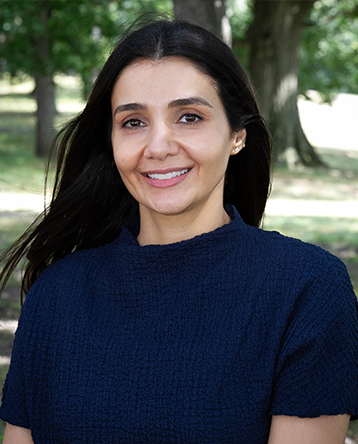
Fakhreddine’s research focuses on developing innovative solutions to address challenges in water quality and water availability. Her work seeks to understand how water moves through the environment and how chemical processes influence water quality in order to develop engineering solutions that protect human and ecosystem health. She is particularly interested in how shifting water availability and management practices influence water quality.
The CAREER award will enable Fakhreddine to investigate processes that affect groundwater management and agricultural sustainability. To increase water supplies for use during drought and other dry periods, farmlands can be flooded to replenish underlying groundwater, a strategy known as flood-managed aquifer recharge. However, this approach can also alter soil chemistry and mobilize naturally occurring contaminants, such as arsenic and uranium, potentially affecting groundwater quality.
By combining field sampling, laboratory experiments, and modeling, the work will develop fundamental knowledge about the processes that control the movement of contaminants in these systems. Findings will be broadly applicable to agricultural soil systems that experience periodic flooding and aid in the development of water management strategies that enhance water security while protecting groundwater quality.
The project includes outreach activities designed to translate research into practice. Through partnerships with groundwater professionals, regulatory organizations, and K-12 schools, this work will develop educational resources and training programs that strengthen groundwater management by supporting professional development and future careers in water science and engineering.
Noelia Grande Gutiérrez, Assistant Professor, Mechanical Engineering
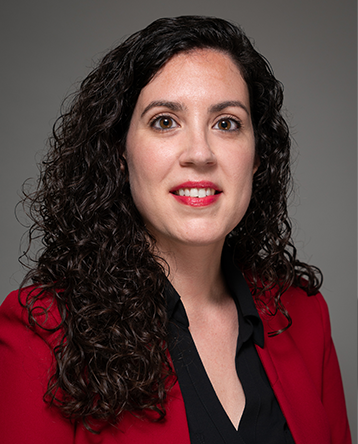
The research of Grande Gutiérrez falls in the intersection of computational engineering and cardiovascular medicine. Through the development and application of multiphysics models, she works to support clinical decision-making and provide insight into cardiovascular disease.
With this CAREER award, a novel engineering framework for studying the placenta—an organ that allows the exchange of gases and nutrients between a mother and baby—will be established by integrating experimental data with physics-based modeling and machine learning. When the placenta does not form or function correctly, it can lead to pregnancy complications and health risks for both the mother and the baby. Despite its importance, the difficulties and ethical and safety concerns of studying the placenta during pregnancy have left longstanding gaps in our understanding of the organ. The project’s outcome will improve understanding of the function of the placenta and guide future strategies to improve maternal and fetal health.
The project will extend to engineering students, giving them the tools to explain the mechanics of pregnancy through core engineering principles and strengthening their technical knowledge. By becoming teachers themselves through a “Learning by Teaching” approach, students will also build science communication skills and engage broader audiences in understanding maternal and fetal health through an engineering lens.
In addition to the CAREER award, Grande Gutiérrez is also a recipient of the 2027 American Heart Association (AHA) Career Development Award. She was awarded for her project that will focus on coronary microvascular disease, a condition that disproportionately affects women and is often overlooked. In collaboration with UPMC, she will investigate the links between hypertensive disorders of pregnancy and coronary artery disease later in life, advancing women’s cardiovascular health. This award from AHA is given to promising early-career healthcare and academic professionals.
Tathagata Srimani, Assistant Professor, Electrical and Computer Engineering

Srimani’s research focuses on the 3D integration of computing systems to build faster, more energy-efficient chips. His approach reduces both the distance and the energy that data must overcome by bringing memory and processing closer together in 3D, far exceeding the bandwidth between logic and memory that conventional 2D chips provide. Together, these gains in energy efficiency and bandwidth translate to substantial performance improvements.
“Today, a huge fraction of a chip’s energy budget is spent just shuttling data between memory and processing,” said Srimani, whose CAREER project will resolve this with more capable and energy-efficient computing systems, such as those for artificial intelligence and large-language models. “These new design frameworks will give engineers the tools to explore this vast design space efficiently.”
By developing new chip design frameworks for these 3D integrated circuits, powered by fast and accurate virtual models, there can be a more rapid exploration of 3D chip design alternatives. Technology targets can then be derived directly from application-level performance needs, inspiring new design methods, open-source design tools, and hardware prototypes that enable more energy-efficient 3D chip computing systems.
K-12 students will also have the opportunity to participate in interactive outreach programs through this project. They will be offered educational activities that integrate chip design into hands-on fabrication and design courses through technical training to prepare them for careers in the semiconductor industry.