
EV batteries: Reduce, reuse, or recycle?
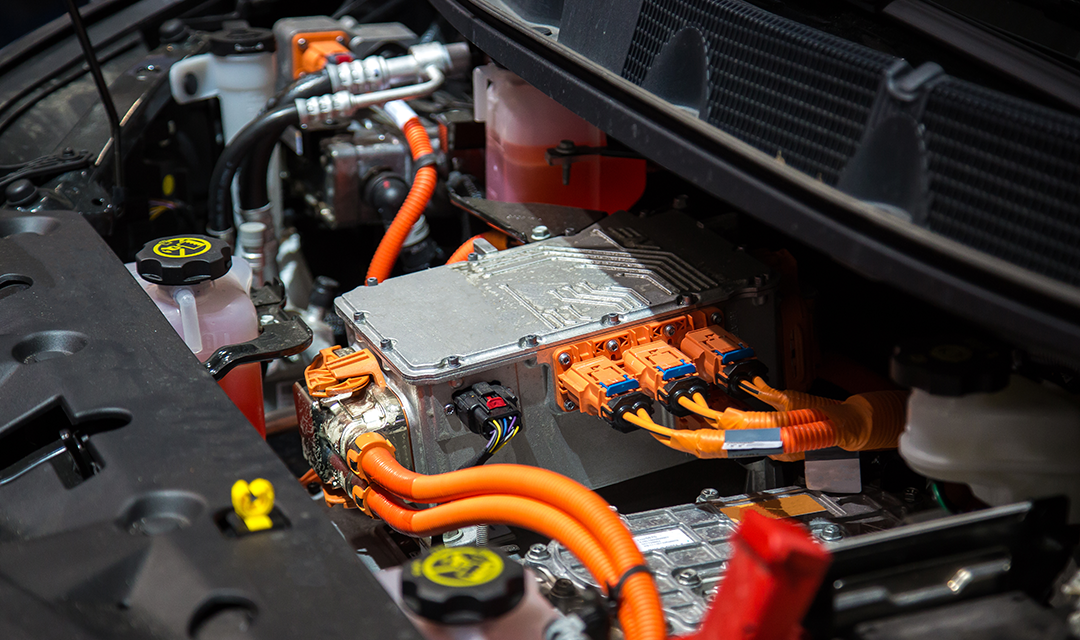
As EV batteries begin to reach the end of their lives, new research shows that their chemistry should guide their best retirement strategy to strengthen the U.S. circular energy economy.
The battery packs powering electric vehicles (EVs) are designed for long-term use, but they won’t last forever, and the first wave of those retirements is now on the horizon. As these batteries begin coming out of vehicles in large numbers, the U.S. faces a critical question: what do we do with them once they’re done?
Each battery contains minerals the nation largely imports, and the way we handle retired packs will determine whether we strengthen the country’s critical mineral supply or deepen our dependency on foreign supply chains.
A new study from Carnegie Mellon’s College of Engineering and the National Laboratory of the Rockies (NLR) offers a data-driven strategy for navigating this challenge and shows that the most effective strategy depends on the chemistry inside each battery. Using a detailed cost model and battery degradation simulations, the researchers evaluated the economic viability of different end-of-life pathways: recycling to recover critical minerals or repurposing for stationary energy storage to support the power grid. They found that treating all batteries the same way risks wasting valuable materials, missing opportunities to extend battery life, and undermining efforts to build a resilient, circular supply chain.
“Different kinds of lithium ion batteries vary in how quickly they degrade and how valuable the materials contained in them are worth,” said Jeremy Michalek, professor of engineering and public policy and mechanical engineering. “So the best retirement strategy depends on the type of battery.”
There are three primary types of lithium batteries used in electric vehicles today: lithium iron phosphate (LFP), nickel cobalt aluminum (NCA), and nickel manganese cobalt (NMC).

The study’s recommendations for EV battery retirement, based on the batteries’ chemistry.
Lithium iron phosphate (LFP) batteries are known for their durability. They retain substantial storage capacity even after years of use in a vehicle, so they excel in second-life applications and could be used in grid-scale energy storage, displacing the need to import battery materials for grid storage. Since they lack expensive minerals like nickel and cobalt, they are hard to recycle economically, so second life applications make sense for LFP.
Nickel cobalt aluminum (NCA) batteries fall on the other end of the spectrum. They degrade more quickly, limiting their usefulness in second-life applications. But, because they contain high concentrations of valuable critical materials, Michalek and his team concluded that recycling them is generally more economical. In most scenarios, the revenue from recovered nickel and cobalt offsets the cost of processing, making recycling NCA batteries the best option.
Nickel manganese cobalt (NMC) batteries fall between these two extremes. Their retirement pathway depends heavily on how they were used in their first life and how demanding their potential second-life application would be. The study finds that some NMC batteries are strong candidates for repurposing, while others should be recycled, and sorting them accordingly would be the essential, yet challenging, key.
The researchers recommend that a national strategy and EV battery retirement policy should recognize these chemistry-specific differences. Rapid diagnostic tools to assess battery health and standardized “battery passports” that document a pack’s history could help support a chemistry-aware retirement approach, help the U.S. reduce reliance on foreign mineral imports and create new domestic industries.
By aligning retirement pathways with battery chemistry, the U.S. can cost-effectively leverage domestic resources as a strategic opportunity for resilience and competitiveness.
Jeremy Michalek, Professor, Engineering and Public Policy, Mechanical Engineering
As the first large wave of EVs begins to retire, the question of how to manage retired batteries becomes urgent. Michalek’s research offers a clear roadmap: repurpose LFPs, recycle NCAs, and sort NMCs.
“By aligning retirement pathways with battery chemistry, the U.S. can cost-effectively leverage domestic resources as a strategic opportunity for resilience and competitiveness,” said Michalek.
This work was a collaboration between Carnegie Mellon’s Departments of Engineerng and Public Policy, Materials Science and Engineering, and Mechanical Engineering along with the Natioal Laboratory of the Rockies (NLR). Authors on the study include Anna Cobb, Katrina Ramirez-Meyers, Jeremy Michalek, Shashank Swaminathan, Paul Gasper, Bryant Polzin, and Kandler Smith.