
Mini lung model shows the ins and outs of the human airway
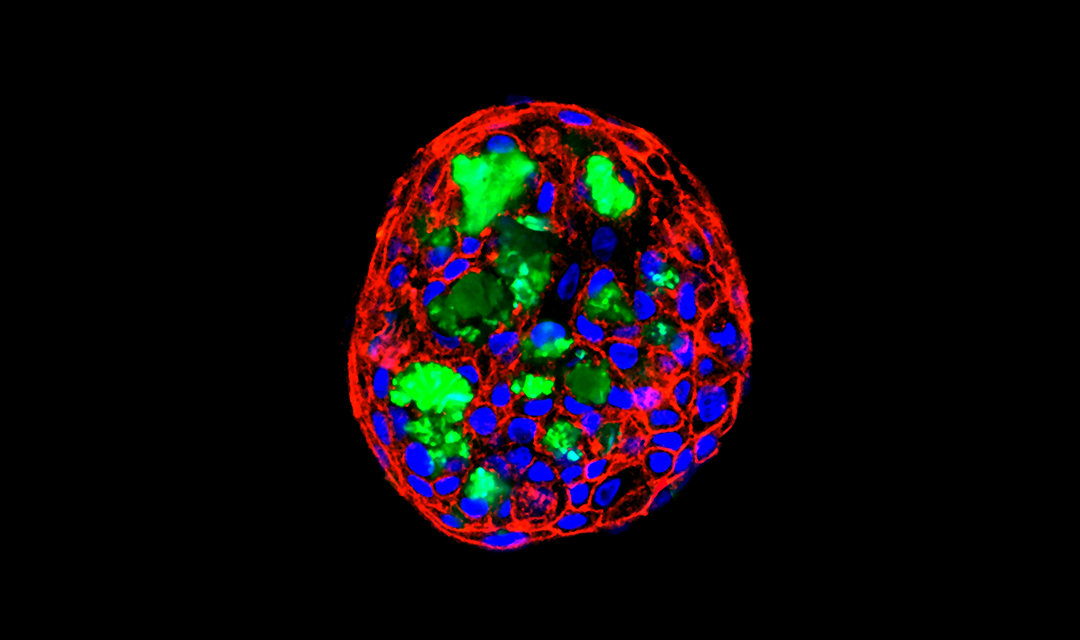
Carnegie Mellon University researchers have co-created a miniature airway organoid model that more accurately reflects real lung biology by pairing lung-derived biomaterials with an “apical-out” design, allowing scientists to better study infections, environmental exposures, and respiratory disease.
Researchers from Carnegie Mellon University’s Ren lab (Engineered Morphogenesis Group) have co-created a miniature model of the human airway that behaves more like real lung tissue. By combining natural lung-derived biomaterials with a special “apical-out” organoid design, the team created a system that captures two key features of airway biology that existing models rarely achieve together.
The lung forms one of the body’s most important interfaces with the outside world. With every breath, airway tissues encounter airborne particles and pathogens. Understanding how airway cells respond to these exposures is essential for studying diseases such as respiratory infection, asthma, and chronic obstructive pulmonary disease.
Scientists often grow miniature tissue structures known as organoids to model human organs. These three-dimensional cultures reproduce some features of real tissue. However, many airway organoid systems capture only part of the biological environment.
“In many conventional organoids, the surface that normally faces the outside environment is hidden inside the structure,” explained Zhuowei Gong, co-lead author of the Biomaterials paper and biomedical engineering Ph.D. student. “That makes it difficult to study infections or other environmental exposures that occur at the airway’s outer surface.”
To achieve an improved model, the team mixed airway stem cells with microscopic particles made from human lung extracellular matrix. The cells naturally organized around the particles, forming uniform spheroids with the air-facing surface on the outside.
The resulting platform, called the decellularized extracellular matrix–incorporated apical-out airway organoid (dECM-AoAO), contained a wider range of airway cell types than conventional models. They included basal stem cells, mucus-producing goblet cells, and cells bearing tiny hair-like structures called cilia. In the body, cilia move mucus and trapped particles out of the lungs. In the lab, the organoids’ cilia can even propel the tiny tissue structures, providing a way to measure cilia function.
This system is surprisingly simple, but powerful.
Zhuowei Gong, Ph.D. student, Biomedical Engineering
“This system is surprisingly simple, but powerful,” Gong said. “We just mix the cells with the matrix particles, and they organize themselves. The matrix guides how the cells grow and differentiate.”
The team also developed a method to track multiple organoids moving together, which they call swarm analysis, an effort led by biomedical engineering Ph.D. student Dhruv Bhattaram (co-first author). By observing coordinated motion, scientists can quickly assess how well the cilia are working across many organoids at once.
In addition, the organoids can be cryopreserved, meaning they can be frozen and stored without losing their structure, cell diversity, or motility. This facilitates collaboration and distribution across laboratories and improves workflow efficiency.
“This is a novel and exciting technology that will revolutionize how airway organoids can be used to understand disease processes and develop new therapeutics,” explained Daniel Weiss, professor of medicine at the University of Vermont.
Xi (Charlie) Ren, associate professor of biomedical engineering at Carnegie Mellon, said the platform could have many applications. Researchers could use it to study how airway cells respond to infections or environmental pollutants. Pharmaceutical teams could test new drugs for asthma, chronic obstructive pulmonary disease, or cystic fibrosis. The model reproduces both the airway’s outer surface and internal tissue environment, allowing investigators to explore whether diseases are driven by changes in the cells, the surrounding matrix, the environment, or their combinations.
“In a structure only a few hundred micrometers across, we can now model both the airway’s internal and external surfaces,” Ren noted. “That gives us a powerful way to study how the lung interacts with the outside world.”
Additional collaborators from Carnegie Mellon University on the paper include former master’s student, Kian Golestan, and Amir Barati Farimani, associate professor of mechanical engineering. Additional external collaborators include Laura Porritt, University of Vermont; Bin Deng, research professor of biology at University of Vermont; and Amy Ryan, associate professor of anatomy and cell biology at University of Iowa.