
Jon Peha
Professor, Engineering and Public Policy
Courtesy Appointment, Electrical and Computer Engineering
Professor, Engineering and Public Policy
Courtesy Appointment, Electrical and Computer Engineering
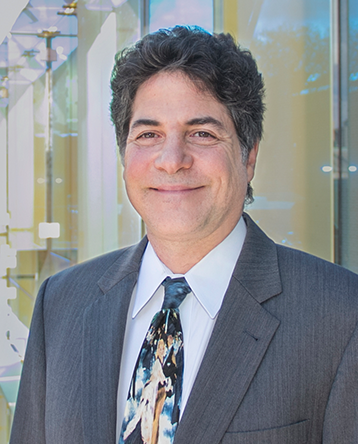
Jon Peha is a professor and center director at Carnegie Mellon University (CMU). He has served at the Federal Communications Commission as the chief technologist, in the White House as Assistant Director of the Office of Science and Technology Policy, in industry as Chief Technical Officer of three high-tech companies, in the House Energy and Commerce Committee, and at USAID where he helped launch and then led a U.S. Government interagency program to assist developing countries with information infrastructure. At CMU, Peha is a professor in the Department of Engineering and Public Policy and the Department of Electrical and Computer Engineering, director of CMU’s Center for Executive Education in Technology Policy, and former associate director of the Center for Wireless & Broadband Networking.
Peha’s research spans technical and policy issues of information and communications technology, including broadband Internet, spectrum, universal access and digital inclusion, satellites and satellite constellations, connected and autonomous vehicles, technology for emergency response (firefighters, police, emergency medical), privacy and cybersecurity, policies for Internet content, secure payment systems, smart cities, and information infrastructure for developing countries.
Peha holds a Ph.D. in electrical engineering from Stanford and a BS from Brown. He is an IEEE Fellow, an ALA Fellow, and an AAAS Fellow, and was selected by AAAS as one of 40 “Featured AAAS Science and Technology Policy Fellows” of the last 40 years (“40@40”). Peha has received the FCC’s “Excellence in Engineering Award” for contributions to the U.S. National Broadband Plan, the IEEE Communications Society TCCN Publication Award for career contributions to spectrum management, the Teare Award for Educational Innovation and Leadership, the CMU Policy Impact Award, and the Brown Engineering Medal.
1991 Ph.D., Electrical Engineering, Stanford University
1986 MS, Electrical Engineering, Stanford University
1984 BS/BA, Electrical Engineering and Computer Science, Brown University
IEEE Spectrum
EPP’s Jon Peha envisions another category of telecommunications services, and believes that “A new Telecom Act should establish a third category: broadband internet-access services,” and should direct the FCC, of which he previously served as the chief technologist, to expand reports and address cloud storage.
SAN
EPP’s Jon Peha explains that “AI companies need guardrails when they choose to interact with the real world” in response to Claude providing the Philadelphia Police Department with a false tip about a real homicide case.
PCMag
EPP’s Jon Peha was quoted on the new dynamic pricing that now quarterly affects all users with Starlink’s broadband connection and equipment.
Straight Arrow News
EPP’s Jon Peha was quoted in Straight Arrow News on how people in remote areas will have access to high-speed internet via recently launched Amazon satellites.
Engineering and Public Policy
As more NGSO constellations are launched, more systems compete for the same frequency bands, creating a growing risk of harmful interference that can reduce data rates. New research from Carnegie Mellon University explains how a novel strategy called “probabilistic look-aside” can help improve internet speeds for consumers.
Federation of American Scientists
EPP’s Jon Peha authored a memo published by the Federation of American Scientists examining the potential benefits and challenges of using generative AI to help police officers write reports.
Congratulations to the 2024 faculty award winners who represent six departments across the College of Engineering. The recipients were recognized for their achievements as researchers and educators.
Government Technology
“There are a lot of people on both sides of this argument, who have been discussing what consumers need, but nobody has asked consumers in a rigorous kind of way. So, we launched this study, which I believe is the first large-scale study to find out what consumers really want.”
CyLab Security and Privacy Institute
CyLab researchers have conducted a large-scale user study of more than 2,500 participants, uncovering the information most important to consumers shopping for broadband internet service and determining what terminology and presentation formats make this information most understandable and useful.
CyLab
EPP’s Jon Peha was interviewed about a recently-published study about how internet service providers handled increased demand caused by the pandemic. While fast download speeds were maintained, the upload speeds integral to videoconferencing stalled.
CyLab Security and Privacy Institute
Internet performance suffered substantially during the COVID-19 pandemic, according to a new study by researchers in Carnegie Mellon University published this week in the Journal of Information Policy.
Bloomberg
CyLab/EPP’s Jon Peha was quoted by Bloomberg on upload speeds and broadband internet.