
Michael Blackhurst
Adjunct Faculty, ESTP
Adjunct Faculty, ESTP
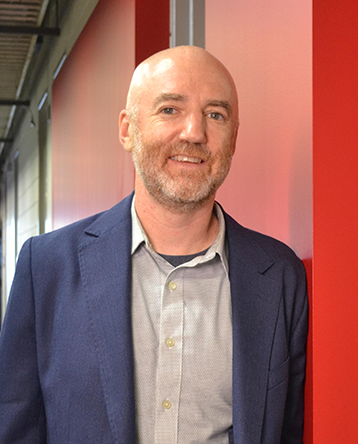
Blackhurst joined Carnegie Mellon University in the Fall of 2023 as the Executive Director of the Open Energy Outlook Initiative at the Engineering and Public Policy department. In this role, he is actively engaged in various activities, including fundraising, marketing, outreach, and research focused on the US energy system. His leadership involves integral internal and external stakeholder management, emphasizing the application of the model developed by his team for real-world impact.
Before joining Carnegie Mellon University, Dr. Blackhurst held academic positions at the University of Texas, Austin, and the University of Pittsburgh. His teaching portfolio encompasses a diverse range of courses, such as Environmental Life Cycle Assessment, Sustainability in Theory and Practice, Engineering Economics, US Energy Policy, and Programming in R for Data Analytics. Dr. Blackhurst's contributions to academia extend beyond teaching. He has been recognized as a member of the Data Science University Committee at the University of Pittsburgh and has participated in the Science Ambassadors Program supported by the National Academy of Science, Engineering, and Medicine. His commitment to sustainability has been honored on multiple occasions, including the University Sustainability Fellowship at the University of Pittsburgh. A strong advocate for influencing positive real-world decisions, Dr. Blackhurst serves as a board member for Fair Shake Environmental Legal Services and is actively involved in committees associated with the Pittsburgh Water and Sewer Authority.
Dr. Blackhurst, an alumnus of Carnegie Mellon University, brings a unique perspective to the intersection of technology and social science. With a background in energy efficiency and
empirical modeling, he has delved into interdisciplinary research, including the energy-water nexus and, more recently, ethics in engineering.
Dr. Blackhurst expresses his enthusiasm for teaching at EST&P and highlights the
interdisciplinary nature of energy and climate studies.He encourages students to be tenacious learners, humble, and to think across disciplines, emphasizing the importance of inviting diverse perspectives into problem-solving.
Outside of academia, Dr. Blackhurst is a seasoned musician, proficient in playing the guitar, piano, mandolin, bass guitar, and drums. His musical interests span rock and roll, folk, and pop genres. Adding a personal touch, he is a proud parent of three children.
Wilton E. Scott Institute for Energy Innovation
Over the last two years, four leading research teams set out to harmonize their electric power system model assumptions to produce more robust policy support.