Passionate students make all the difference in translational BME research
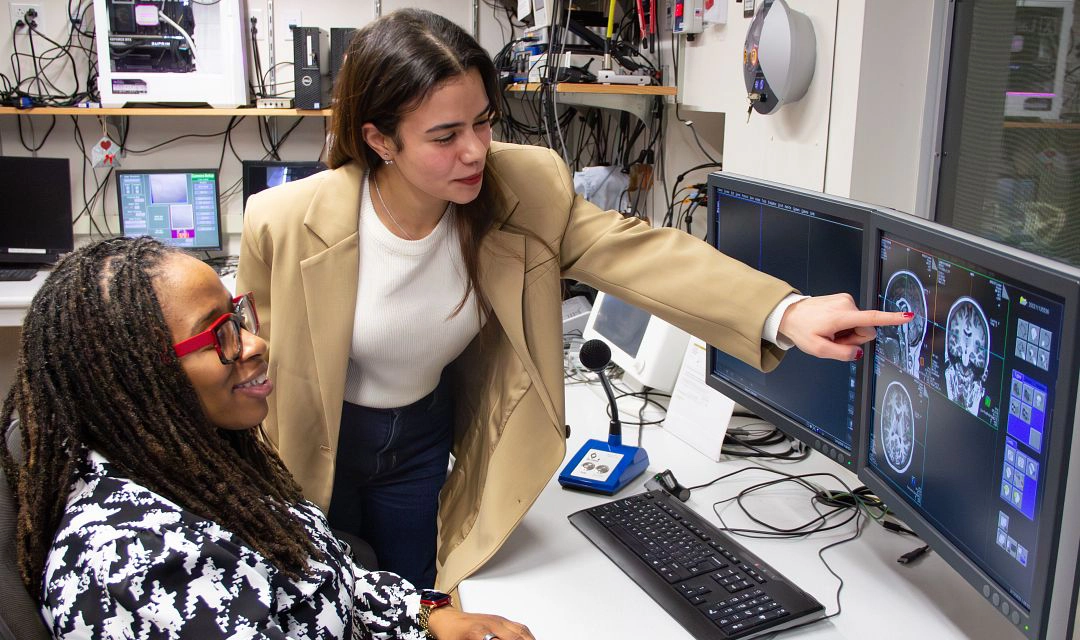
From the lab and simulations to the clinic, students help bring faculty research on sickle cell disease into the spotlight with medical conference presentations and publications in engineering journals.
Solving complex medical problems with engineering solutions is the cornerstone of the biomedical engineering field. That translational aspect of academic research is the point, the ultimate goal. But not all brilliant ideas make the leap to the clinical setting.
According to Sossena Wood, assistant professor of biomedical engineering, one of the critical factors for success is an engaged student willing to take up the mantel. And over the last several months, she’s seen work on sickle cell disease in the Wood Neuro Research Group and Biomedical Flows Simulation & Multiscale Modeling Lab thrive under Ph.D. student Lara Abdelmohsen.
“It’s exciting to have an idea, but they don’t always stick,” said Wood. “If you have a student who has buy-in, that makes the difference. Then it might materialize into something actionable.”
In BME, you are still an engineer, but the goal is for your work to make it to the clinic, for you to have an impact in how patients are treated.
Sossena Wood, Assistant Professor, Biomedical Engineering
Drilling into a core passion
Sickle cell disease (SCD), a debilitating genetic disorder affecting hemoglobin in red blood cells, comes with a lifelong risk of stroke. However, guidelines for using transcranial Doppler ultrasound to prevent stroke only exist for children, not for adults.
To address this gap, Abdelmohsen, co-advised by Wood and Noelia Grande Gutiérrez, assistant professor of mechanical engineering and biomedical engineering, used patient-specific MRI data to build 3D computational models of blood flow in the brain’s major arteries, comparing healthy adults with adults who had sickle cell disease with and without prior stroke.
The team’s recently published research in Annals of Biomedical Engineering suggests that stroke risk in adults with sickle cell disease may be shaped not only by vascular anatomy, but by the forces acting within the circulation itself.
“We are using MRIs from the patients to build a virtual model of their anatomy where we can simulate what is happening with their cerebral blood flow, which is not clinical practice in adults as it is in children,” said Abdelmohsen. “It’s really cool because you are looking into the blood vessels deep in the brain without having to perform invasive surgical procedures.”
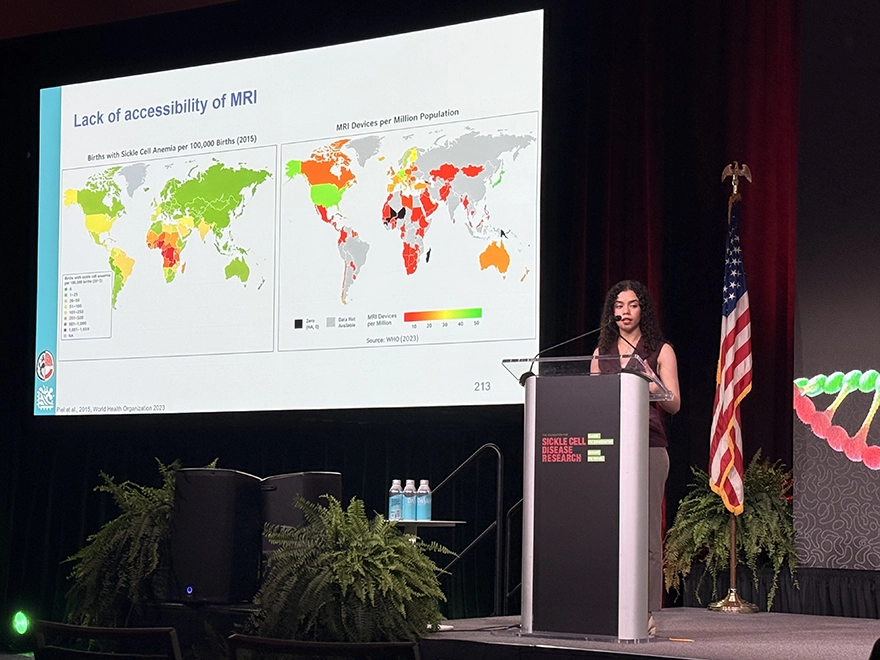
The research targets a core challenge in the clinical setting—the quality limitations of ultrasound imaging and the high cost and lower accessibility of MRIs. The simulations show a level of detail in the flow of blood in the brain that is currently unavailable to doctors in their day-to-day role and can help hypothesize the vulnerability and health of patient-specific blood vessels to cerebrovascular risk.
“What we are trying to accomplish here is to get the best of both worlds,” said Grande Gutiérrez. “With the simulations applied to static MRI images, we can see what’s happening inside the body, a great level of detail that will help doctors have more comprehensive information for future decision making. We can overcome a lot of limitations in a cost-effective way.”
Taking research on the road
The research has gained a lot of traction in the academic, medical, and sickle cell disease patient communities. In March, Abdelmohsen was invited to give an oral presentation and poster at the annual meeting of the United States Association for the Study of Pain in Philadelphia. Joel Disu, a fellow CMU BME Ph.D. candidate who is studying the use of neural imaging to improve chronic pain in sickle cell disease patients, guided Abdelmohsen to presentations where she could gain insight into the patient experience.
“It was eye opening to hear directly from patients about how debilitating the pain is,” said Abdelmohsen. “Their insight was invaluable. They told us what they want to see more of in the field and helped connect us to other patients for research.”
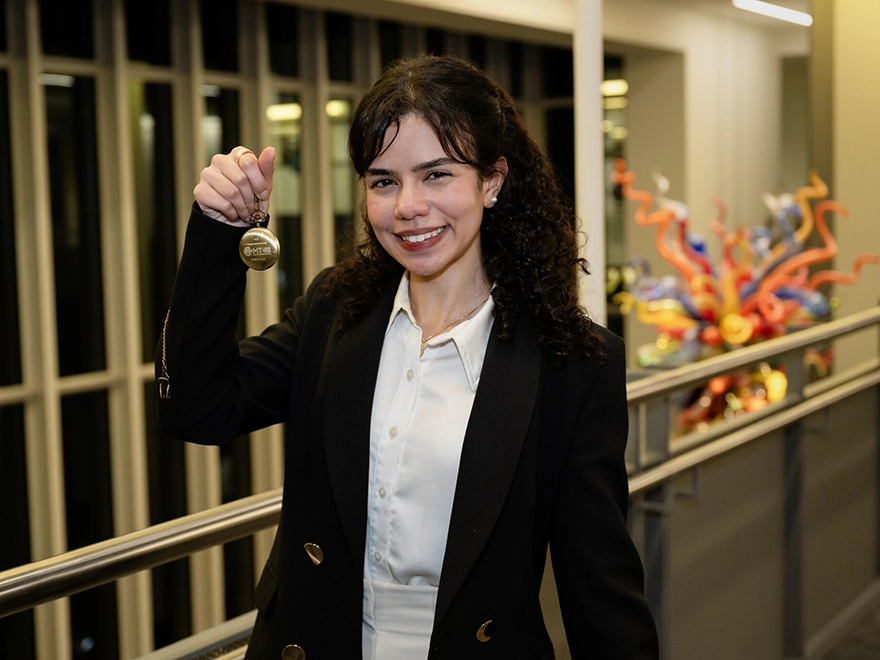
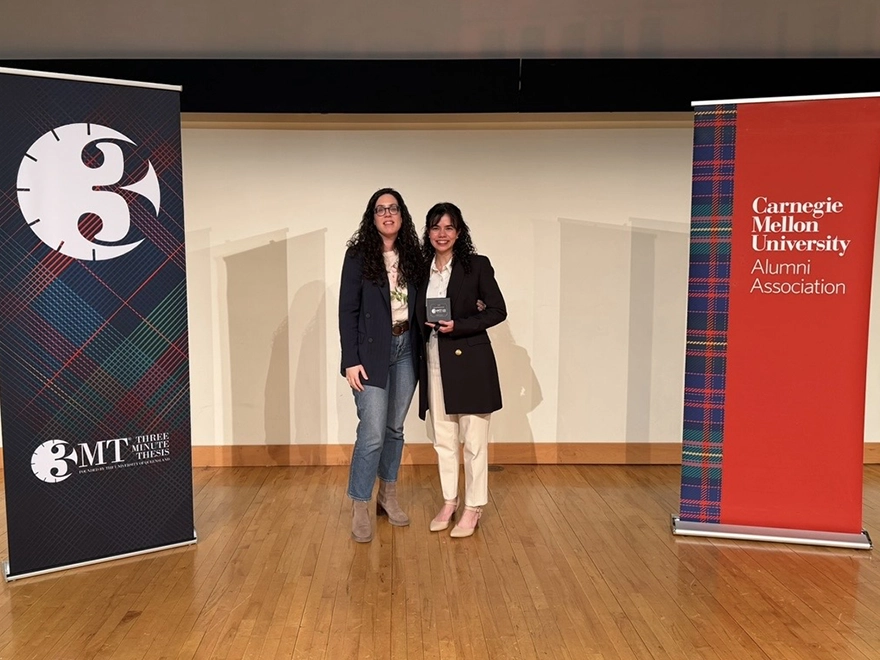
Abdelmohsen had to leave the conference early to rush back to Pittsburgh for CMU’s 3 Minute Thesis, an internationally recognized competition that challenges doctoral students to present their research in a compelling way to a broad audience—all in three minutes. She won third place in the competition with her presentation titled “The Brain’s Roundabout: Understanding Stroke in Adults with Sickle Cell Disease.”
“I’ve always wanted to improve my public speaking skills in front of a big audience,” said Abdelmohsen. “Plus, we are doing all this cool work, but if no one knows what we are doing, it won’t go anywhere.”
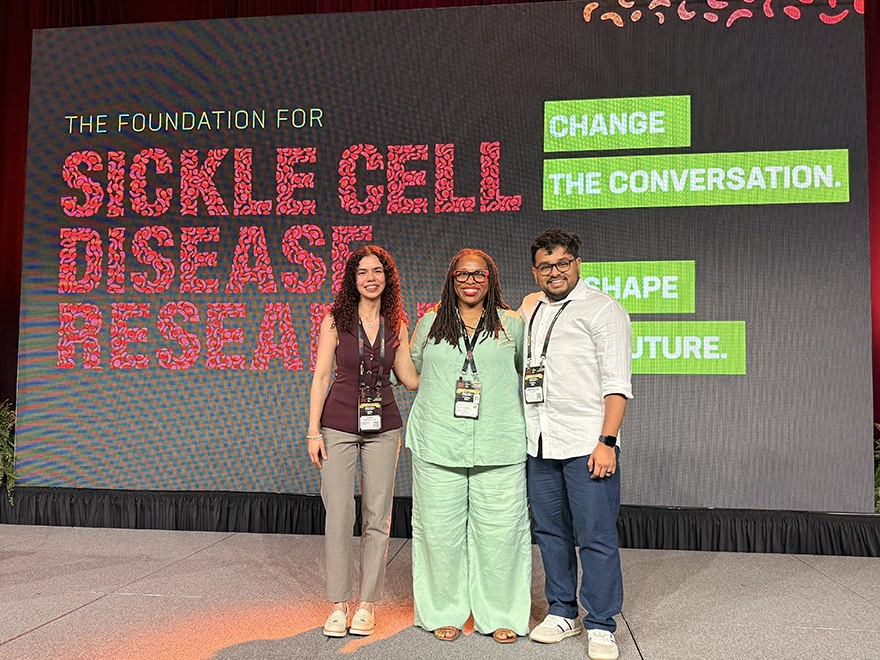
Abdelmohsen continued her “tour” over the summer, presenting to researchers, patients and adult and pediatric clinicians at the annual meeting of the Foundation for Sickle Cell Disease Research in Fort Lauderdale. Wood said her talk generated excitement around patient-specific modeling approaches and their potential to improve understanding of cerebrovascular complications in sickle cell disease.
“The most novel part of the project is that we are working with adults with the disease,” said Abdelmohsen. “A lot of people at the conference were happy to see that, and seeing cerebral vascular modeling is unique and novel and exciting.”
A patient who has been following the work being done in the CMU labs said, “I am confident that, through studies like this, the right tools and techniques will emerge to help identify potential complications early and prevent them from worsening outcomes and quality of life for SCD patients. I look forward to seeing more studies like this.”
We are doing all this cool work, but if no one knows what we are doing, it won’t go anywhere.
Lara Abdelmohsen, Ph.D. Student, Biomedical Engineering
Helping patients in need
September is National Sickle Cell Awareness Month, which aims to raise public education, support research, and address healthcare challenges for those affected by sickle cell disease.
Wood said the community faces ongoing challenges related to screening for the disease, family and genetic counseling, stigma, and misconceptions.
“As people with sickle cell disease live longer, it’s an opportunity to get innovative about our solutions to keep them living healthy,” said Wood. “Engineering should be at the forefront of that conversation, as our research brings together biomechanics and imaging.”
It helps having a committed group of students driving the lab’s work and championing the research publicly. Wood said that an idea between her and Grande Gutiérrez, about bringing images to life to simulate blood flow in the brain, needed Abdelmohsen to make it a reality.
“In BME, you are still an engineer, but the goal is for your work to make it to the clinic, for you to have an impact in how patients are treated,” said Wood. “It’s not something everyone can do. But going to conferences, getting people interested in what we are doing, engaging with doctors, showing them how applying engineering tools can impact how patients are treated and evaluated—that’s what’s going to make the difference between a dissertation that stays on the shelf and one that makes it on the other side.”