NVIDIA security engineer shares insights on career paths
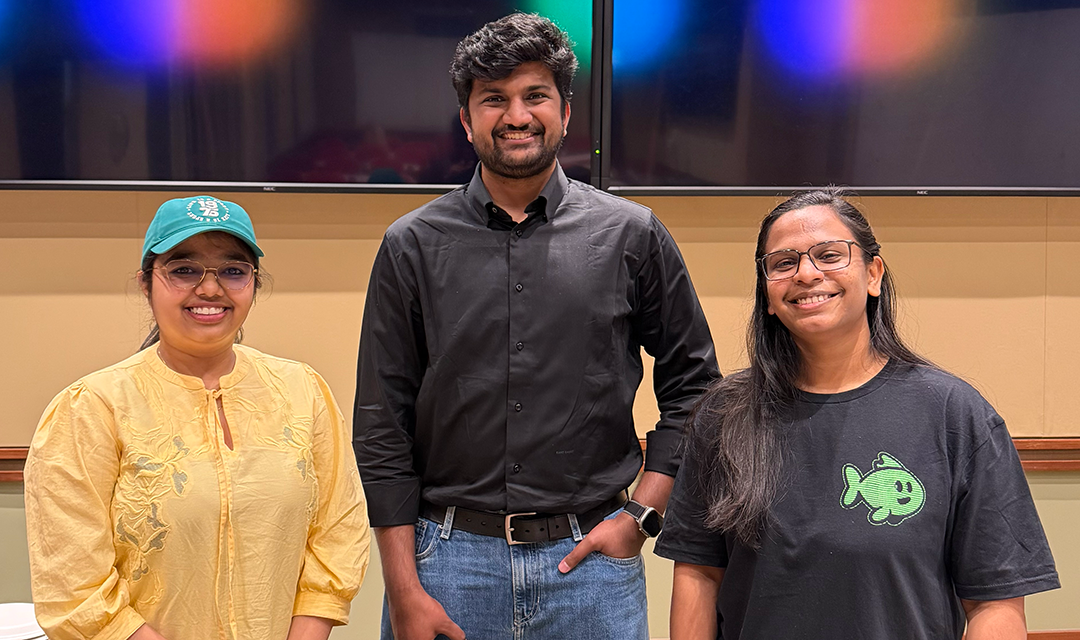
Riyaz Rafi Ahmed, a security engineer at NVIDIA and an alum from CMU’s Information Networking Institute, led a special presentation for students, titled “Security Engineering: Career Path + Industry Insights.”
Understanding data structures and algorithms is challenging, and so is finding the right job. That’s why a decade ago, the students at Carnegie Mellon University Silicon Valley established the Coding Gym, a weekly, drop-in gathering where students strengthen their technical chops and support each other as they navigate the employment process.
A goal of these student-led sessions is to bolster collaborative problem-solving; however, occasionally guest speakers are invited to share industry views. Case in point: Riyaz Rafi Ahmed, a security engineer at NVIDIA and an alumnus from Carnegie Mellon’s Information Networking Institute.
In March, Ahmed led a special guest session, titled “Security Engineering: Career Path + Industry Insights,” which focused on security engineering and the broader landscape of cybersecurity. Ahmed was invited by Aadhil Mubarak Syed, a Coding Gym co-lead along with Ephron Wu. Both students serve as Peer Career Consultants and are pursuing master’s degrees in software engineering in the Department of Electrical and Computer Engineering.
When Mubarak Syed was considering CMU-SV for his graduate work, he talked to Ahmed about the program at a student-alumni mixer. “Since we shared a similar cultural and personal background, our friendship grew, and we kept in touch regularly in the following months,” says Mubarak Syed. Thanks to Mubarak Syed’s invitation, Ahmed returned to campus once again to share insights from his own experience in the field. “Students came away with a clearer understanding of security engineering as a broad and multidisciplinary field.”
Ahmed’s presentation walked students through major cybersecurity domains, such as security architecture, application security, security operations, threat intelligence, compliance, and risk management, and he discussed how they fit together in industry. He offered advice on different entry points into security for students with software engineering backgrounds.
According to Mubarak Syed, the session expanded the students’ perspectives beyond traditional software engineering roles. “Ahmed’s talk highlighted that security engineering is not a single path, but a collection of interconnected domains, which helped students better understand where they might fit within that landscape.”
“It was valuable for students to hear directly from someone working in the field, especially in a role that intersects with emerging areas like AI security,” said Mubarak Syed. “That real-world context made the concepts more tangible and actionable.”