
Student Spotlight: Daniel Diaz
Monica Cooney
Mar 18, 2026
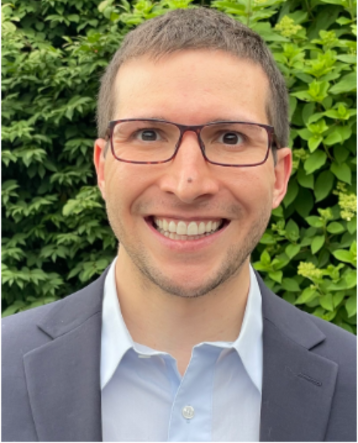
Daniel Diaz is a Ph.D. student in Materials Science and Engineering at Carnegie Mellon University, where his research focuses on computational modeling of microstructure-property relationships. He received both his B.S. and M.S. in Materials Science and Engineering from the University of Michigan. Prior to beginning his Ph.D., Daniel worked as a research engineer at early-stage technology startups in the San Francisco Bay Area, where he focused on advanced materials development and applied research. He was also a research fellow working in collaboration with researchers at Lawrence Berkeley National Laboratory.
What does your research entail?
My research focuses on developing computational methods to better understand how microstructural features influence the mechanical behavior of materials. In particular, I work with elasto-viscoplastic fast Fourier transform (EVP-FFT) simulations, which are used to model stress and strain evolution within complex microstructures at the microscale. These simulations allow us to study how features such as pores, grain structure, and local heterogeneity affect deformation and failure behavior.
A key part of my work has involved implementing a “composite voxel” approach within EVP-FFT simulations. Traditional FFT-based methods often rely on binary voxel representations of microstructures, which can introduce numerical artifacts such as Gibbs oscillations near sharp interfaces. The composite voxel approach mitigates this issue by assigning fractional material properties to voxels near boundaries, allowing for smoother transitions between phases and more physically realistic stress and strain fields.

Comparison of stress–strain concentration fields around an inclusion using Regular MASSIF (top) versus Composite Voxel MASSIF
Within the AFOSR Center, I have begun collaborating with other researchers to apply these simulation tools to experimentally measured microstructures. For example, I have worked with collaborators to prepare EBSD datasets for simulation and to help set up simulation workflows that can be used to analyze microstructure-sensitive mechanical behavior. The goal of this work is to connect experimental microstructural data with high-fidelity simulations in order to better understand structure-property relationships in advanced materials.
How has being part of the center impacted your research?
Participation in the center has provided opportunities to connect my simulation work with experimentally measured microstructures through interactions with collaborators and shared datasets. These interactions help ensure that the computational tools I am developing can be applied to materials and microstructures that are directly relevant to ongoing experimental efforts.
Interests outside the classroom/lab:
Outside of research, Daniel enjoys cycling and spending time outdoors. He frequently rides road bikes through the steep hills around Pittsburgh and enjoys mountain biking on local trail systems.