Keith Cook
Department Head and Professor, Biomedical Engineering
Director, Bioengineered Organs Initiative
Department Head and Professor, Biomedical Engineering
Director, Bioengineered Organs Initiative
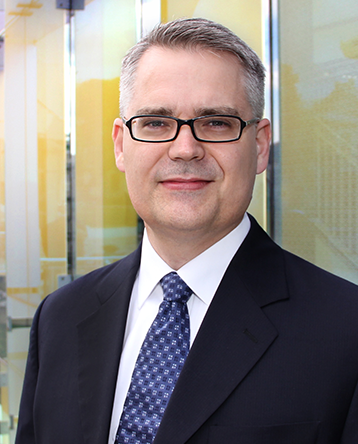
Keith Cook is a professor in the Biomedical Engineering Department of Carnegie Mellon University. Cook’s research applies biomedical engineering to cardiac and pulmonary diseases. His laboratory’s goal, therefore, is to generate new devices, treatment strategies, and diagnostic tools and translate them to the clinic.
Current research projects in his group include thoracic artificial lungs, perfluorocarbon emulsions for pulmonary drug delivery, new biomaterial approaches for reducing coagulation at artificial surfaces, and PET-based diagnostic tools for right ventricular dysfunction. Of note, his laboratory was the first to produce 24 hour, week, and 30-day in vivo studies of thoracic artificial lungs, and his group is working on a artificial lung intended as destination therapy for years of respiratory support. Professor Cook currently serves as an editor of the American Society of Artificial Internal Organs Journal.
2000 Ph.D., Biomedical Engineering, Northwestern University
1996 MS, Biomedical Engineering, Northwestern University
1993 BSE, Engineering Science, University of Michigan
1993 BSE, Mechanical Engineering, University of Michigan
Congressionally Directed Medical Research Programs
BME Head Keith Cook was praised by the Congressionally Directed Medical Resource Program for his work on a lightweight pulmonary assist system that could provide life support for soldiers and civilians.
Chemical Engineering
Olivia LaFond, a Carnegie Mellon University senior majoring in biomedical and chemical engineering, created a 3D-printed device that one day could reduce the need for invasive procedures or help deliver medication directly inside the body over time.
Biomedical Engineering
Reflecting on their time in the department, sisters Kimberly and Lindsay Lamberti recall a warm, supportive community and an academic structure that gave them the tools to thrive.
MechE’s Jon Cagan and Chris McComb, BME’s Keith Cook and Rosalyn Abbott, and BME/MSE’s Adam Feinberg are leading sessions at SXSW 2025 that will focus on the application of AI in education and organ transplant technology.
CMU Engineering
Keith Cook joins a multi-institutional, DARPA-funded project to create a novel ECMO and advanced life-support system device capable of rapid deployment to support wounded military personnel.
CMU Engineering
Carnegie Mellon’s entry into online education will provide working professionals flexible access to world class graduate-level training in emerging and evolving technologies.
CMU Engineering
An interdisciplinary team led by Keith Cook has been awarded $8.7 million dollars from the U.S. Army to create and integrate new technologies to sustain permanent at-home artificial lung support.
US Army CDMRP
BME’s Keith Cook, Jana Kainerstorfer, and Howie Choset, along with colleagues at Vanderbilt University and Cornell University, have been awarded an $8.7 million grant from the US Army CDMRP program. The group is working to create and integrate technologies that enable artificial lungs to transition from temporary support in the ICU to permanent support at home.
CMU Engineering
Mayo Clinic and Carnegie Mellon University announced today a research agreement to transform organ transplantation. The institutions will bioengineer innovative approaches to address current barriers in organ transplantation.
CMU Engineering
Keith Cook has been selected to be the next head of the Biomedical Engineering Department (BME) at Carnegie Mellon University’s College of Engineering. The appointment takes effect immediately.
U.S. Department of Defense
BME Interim Head Keith Cook has been awarded a $1.45 million grant from the U.S. Army Congressionally Directed Medical Research programs to develop a pulmonary assist system (PAS) to support military veterans and other patients with long-term, incurable lung disease for a period of months to years.
CMU Engineering
Rosalyn Abbott’s latest biomaterials research investigates the use of non-invasive, therapeutic ultrasound to trigger and adjust silk scaffold degradation post-implantation.