
Principal Investigator

Burak Ozdoganlar
Ver Planck Professor, Mechanical Engineering
Dr. Burak Ozdoganlar is the Ver Planck Endowed Chair Professor of Mechanical Engineering at Carnegie Mellon University, with appointments in Biomedical Engineering, Materials Science & Engineering, and the Neuroscience Institute, and he serves as Associate Director of the College of Engineering’s Research Accelerator. An elected Fellow of ASME, SME, and AIMBE, his work bridges advanced manufacturing and biomedicine—advancing micro/nanofabrication and precision metrology to create implantable devices, microneedle systems, wearables, and soft/stretchable electronics, with additional contributions in tissue engineering and dynamics. He has authored 200+ publications, and his research is supported by ARPA-H, NIH, NSF, DOE, DARPA, Horizon Europe (EU), foundations, and industry.
Post-doctoral researchers

Sampada Acharya
Post-Doctoral Researcher, Mechanical Engineering
- Ph.D. in Mechanical Engineering
Carnegie Mellon University - 2025 - M.S. in Mechanical Engineering
Carnegie Mellon University - 2021 - B.E. in Mechanical Engineering
Mumbai University - 2018
Dr. Sampada Acharya is working on developing implantable, cell-based bioelectronic devices as part of the ARPA-H-funded BIO-INSYNC consortium. She is also involved in the design and execution of in-vitro and in-vivo device calibration and performance studies.

Mert Arslanoglu
Post-Doctoral Researcher, Mechanical Engineering
- Ph.D. in Mechanical Engineering
Carnegie Mellon University - 2023 - M.S. in Mechanical Engineering
Carnegie Mellon University - 2021 - B.S. in Mechanical Engineering
Boğaziçi University - 2017
Dr. Mert Arslanoglu is the Technical Project Manager for the ARPA-H/BIO-INSYNC implantable bioelectric medicine initiative, leading cross-functional teams to improve thyroid treatments and advance equitable healthcare. His research focuses on designing porous materials with tunable architectures for energy storage and carbon capture, and enhancing their performance through nanomaterial infiltration, including MXenes and CNTs.

Aman Bhatia
Post-Doctoral Research Associate, Mechanical Engineering
- Postdoctoral Research Associate-III in Biomedical Engineering
University of Arizona - 2023 to 2025 - Postdoctoral Researcher in Chemistry
Pusan National University - 2022 to 2023 - Ph.D. in Chemistry (Electrochemical Immunosensors)
Pusan National University - 2022 - M.S. in Applied Chemistry
Amity University - 2017 - B.S. in Industrial Chemistry
University of Delhi - 2014
Dr. Aman Bhatia will contribute to the ARPA-H C-DETECT program, advancing development of a multiplexed, urine-based electro-microfluidic platform for at-home multi-cancer early detection. His interdisciplinary expertise spans electrochemical biosensors, polymer nanocomposites, microfluidics, 3D printing, and PCB-level system integration, supported by multi-institutional and collaborative research experience. Dr. Bhatia holds a Ph.D. in Chemistry with emphasis on nano-electrochemical signal amplification strategies and clinical bioassays and has authored more than a dozen peer-reviewed publications in biosensing, electrochemistry, soft device engineering, and wireless health systems. His ongoing research focuses on engineering soft, biomedical platforms and scalable, minimally invasive diagnostic systems that integrate biochemical transduction with flexible bioelectronic architectures for continuous monitoring in both clinical and resource-limited settings.

Toygun Cetinkaya
Post-Doctoral Researcher, Mechanical Engineering
- Ph.D. in Mechanical Engineering
Carnegie Mellon University - 2024 - M.S. in Mechanical Engineering
Carnegie Mellon University - 2024 - B.S. in Mechanical Engineering
Middle East Technical University - 2016
Dr. Toygun Cetinkaya is a precision micromanufacturing researcher and engineer specializing in soft and stretchable electronics, biomedical implants, and micro-scale devices. He has led pioneering work in freeze micromilling for fabricating complex 3D geometries in cartilage implants and liquid metal electronics, and co-developed high-throughput manufacturing systems for microneedle arrays and biosensors.
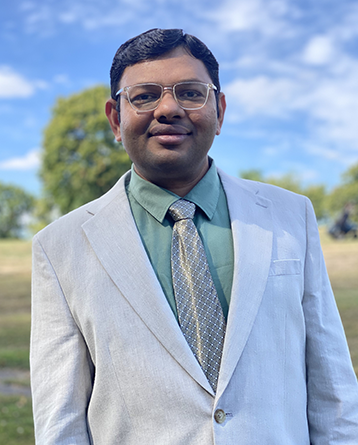
Dinesh K. Patel
Post-Doctoral Researcher, Mechanical Engineering
- Project Scientist and Postdoctoral Fellow
Carnegie Mellon University (Human Computer Interaction Institute) - 2020 to 2023 - Postdoctoral Research Associate
Carnegie Mellon University (Mechanical Engineering) - 2018 to 2020 - Postdoctoral Fellow
The Hebrew University of Jerusalem (Casali Institute of Chemistry) - 2014 to 2018 - Ph.D. in Chemistry
University of Mumbai-Bhabha Atomic Research Centre - 2014 - M.Sc. in Chemistry
University of Mumbai - 2008 - B.Sc. in Chemistry
University of Mumbai - 2007
Dr. Dinesh K. Patel is a Project Lab Manager for the ARPA-H C-DETECT program, where he leads cross-functional teams developing an at-home, early cancer detection platform based on a multiplexed, urine-based electro-microfluidic system. His work brings together functional materials, microfluidics, sensing, and device engineering to advance accessible and minimally invasive diagnostic technologies.
His research interests include functional materials, advanced additive manufacturing at millimeter- to micron-scale resolutions, soft robotics, actuators, morphing materials, and printed electronics. He has extensive experience in developing functional polymers and composites, liquid-metal-based materials, stretchable devices, and electro- and mechanoluminescent systems for applications in robotics, sensing, wearable electronics, and emerging healthcare technologies.
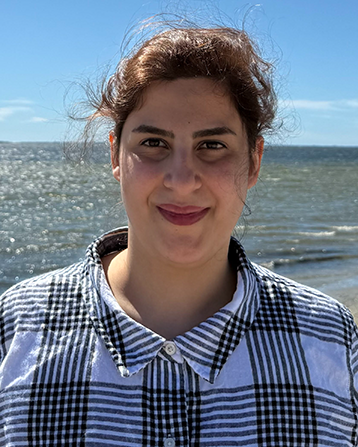
Reihaneh Toutouni
Post-Doctoral Researcher, Mechanical Engineering
- Post-Doctoral Research Associate, Chemical Engineering
University of Notre Dame - 2025 - Ph.D. in Petroleum Engineering
University of Wyoming - 2022 - M.S. in Electrical Engineering
University of Tehran - 2016 - B.S. in Engineering Sciences
University of Tehran - 2013
Dr. Reihaneh Toutouni leads the microneedle fabrication and precision coating efforts for the laboratory's MNA-ITMA (Integrated Microneedle Arrays and Temperature Measurement Array) multi-allergy testing platform. With over eight years of interdisciplinary R&D experience, her expertise uniquely bridges experimental device fabrication and computational transport modeling. She leverages a strong background in cleanroom microfabrication, thin-film optimization (including ultra-thin transition metal oxide thermistors), and biofluid rheology, combined with data-driven simulation (CFD, Molecular Dynamics, and Machine Learning) to design and optimize complex micro-scale diagnostic systems. Dr. Toutouni holds a Ph.D. from the University of Wyoming, where she specialized in interfacial phenomena and molecular-scale fluid dynamics. Her overarching research focuses on integrating rigorous experimental characterization with modern data analytics to engineer scalable, minimally invasive biosensors and accessible point-of-care diagnostic platforms.
Ph.D. candidates and students

Joshua R. Siegel
Ph.D. Candidate, Mechanical Engineering
Lab Manager, Ozdoganlar Laboratory
- M.S. in Mechanical and Aerospace Engineering
University of California, Davis - 2024 - B.S. in Biomedical Engineering
University of California, Davis - 2022
Josh is developing hollow and dissolvable microneedle arrays for biofluid sampling and drug delivery, with a focus on minimally invasive, patient-friendly solutions. His work also includes the design and fabrication of microfluidic devices, such as lab-on-a-chip systems, for integrated analysis and point-of-care diagnostics.

Feimo Yang
Ph.D. Candidate, Mechanical Engineering
Co-advisor: Phil LeDuc
- M.S. in Mechanical Engineering
Texas A&M University - 2022
B.S. in Mechanical Engineering
University of Texas at Arlington - 2019
Feimo's research focuses on 3D-printing exotic materials and their related applications. He co-developed 3D-printing with ice and is now working on implementing it in new strategies to create biohybrid implants.

Rohit K. Yadav
Ph.D. Candidate, Mechanical Engineering
Co-advisor: Rahul Panat
- Ph.D. Candidate, Mechanical Engineering,
MS in Mechanical Engineering
Carnegie Mellon University - 2026 - M.Tech. in Metallurgical Engineering and Material Science
Indian Institute of Technology Bombay - 2023 - B.Tech. in Metallurgical Engineering and Material Science
Indian Institute of Technology Bombay - 2023
Rohit's research interests are understanding and exploiting the effect of processing parameters on desirable properties of materials. His current projects involve using freeze casting to produce novel materials for energy applications.

Zijuan Liang
Ph.D. Candidate, Mechanical Engineering
Co-advisor: Rebecca Taylor
- B.S. in Mechanical Engineering
University of Notre Dame - 2021
Zijuan is interested in researching DNA origami-based gene therapy. By designing and fabricating gene-encoded DNA nanostructures, she aims to develop a biocompatible and efficient gene-delivery platform.

Alec Vucsko
Ph.D. Candidate, Mechanical Engineering
- M.S. in Mechanical Engineering
Purdue University - 2025 - B.S. in Mechanical Engineering
Purdue University - 2021
Alec is working on a nanopositioning force-measurement module for in-vivo dynamic motion analysis of tissues and cells.

Edo Bareket
Ph.D. Candidate, Mechanical Engineering
- B.S. in Mechanical Engineering
Georgia Institute of Technology - 2024
Edo is working on precision robotic assembly of implantable medical devices. He has previous experience in automation and designing surgical devices for cardiac surgery.

Paul J. Walter
Ph.D. Candidate, Mechanical Engineering
- B.S. in Mechanical Engineering
University of Pittsburgh - 2020
Paul's research focuses on microscale additive manufacturing techniques for novel cellular engineering approaches in implantable medical devices. His work also explores strategies for vascularizing engineered tissues. The overarching goal of his research is to advance patient-centric treatments and create medical devices tailored to individual conditions and needs.

Rozhan Kiani
Ph.D. Candidate, Mechanical Engineering
Co-advisor: Eni Halilaj
- B.S. in Mechanical Engineering
Sharif University of Technology
Rozhan’s research focuses on developing wearable sensor–based digital biomarkers to characterize movement in daily life and understand its relationship with long-term joint health after ACL reconstruction. Her work combines wearable-derived gait measures with medical imaging to study biomechanical factors associated with cartilage changes and post-traumatic osteoarthritis.

James Votruba-Drzal
Ph.D. Student, Materials Science and Engineering
Co-advisor: Phil LeDuc
- B.S. in Materials Science and Engineering
University of Pennsylvania - 2025
James is working on the ARPA-H LIVE liver printing project, where he’s using camphene-ice printing to fabricate artificial liver sinusoid vasculature. This project is a collaboration with the Feinberg group in BME.
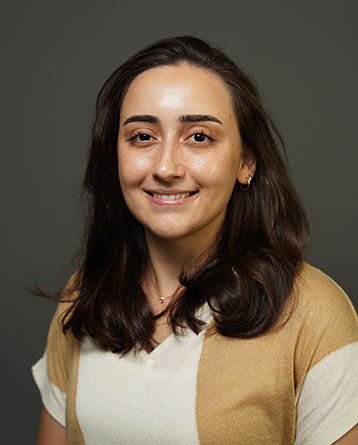
Defne Kudug
Ph.D. Student, Mechanical Engineering
- M.S. in Biomedical Engineering
Carnegie Mellon University - 2026
Fulbright Türkiye Scholar - B.S. in Chemical and Biological Engineering
Koc University - 2024 - B.S. in Electrical and Electronics Engineering
Koc University - 2024 - Minor in Molecular Biology and Genetics
Koc University - 2024
Defne's research interests focus on the design and fabrication of biomedical devices, particularly wearable and minimally invasive sensing technologies, including microneedle-based platforms. She is interested in integrating micro/nanofabrication, electrochemical biosensing, and bioelectronic interfaces to develop devices for physiological monitoring and therapeutic applications. Her previous research experience includes wearable sensing, particularly the fabrication, calibration, and integration of liquid-metal-based soft wearable sensors for rehabilitation applications, as well as research involving shape-memory alloys and paper-based point-of-care biosensors.
Master's students
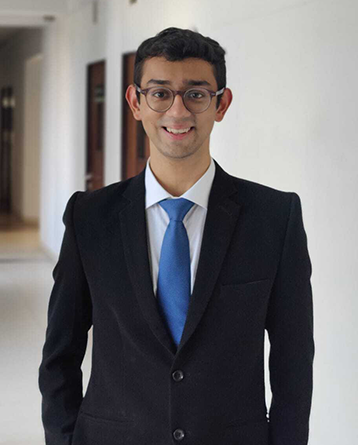
Adit Atul Rambhia
Master's Student, Biomedical Engineering
- B.Tech in Materials Engineering (Gold Medalist)
IIT Gandhinagar - 2025
Adit is a Materials Engineer by training, who is interested in manufacturing of medical devices. He brings his materials knowledge and complements it with mechanical and biomedical engineering to work on multiple projects. Currently, he is working on ingestible devices and Microneedle Arrays for allergy diagnostics.

Gavin M. Schmidt
Master's Student, Tepper School of Business
- B.S. in Biological Sciences
University of Pittsburgh - 2024
Gavin is the ‘in-house’ biologist on the Ozdoganlar Laboratory Team. He is assembling a cell culture & tissue engineering lab to test the viability, function, and biomaterial interactions of the organoids used for the BIO-INSYNC device.
Undergraduate students
-
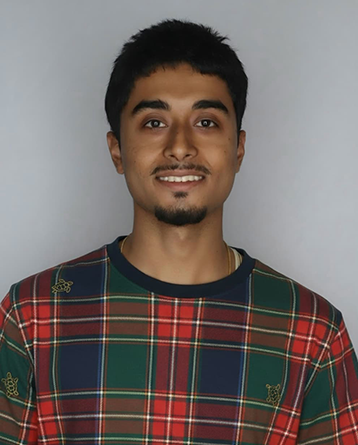
Siddhant Chakraborty
Undergraduate Student
Mechanical Engineering -
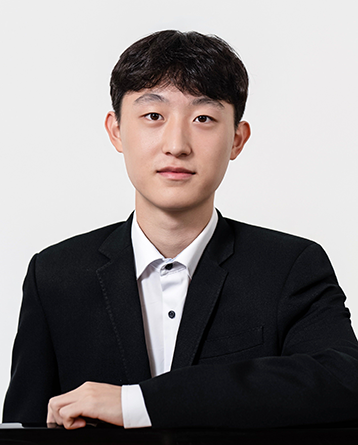
Ryan Chung
Undergraduate Student
Science and Arts -
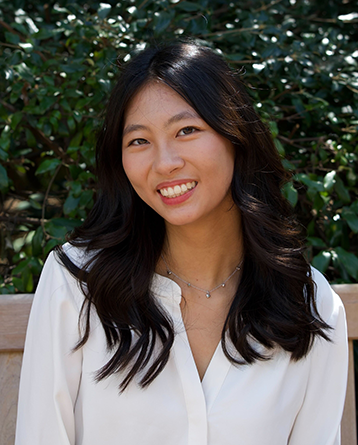
Crystal Jiang
Undergraduate Student
Materials Science and Engineering, Biomedical Engineering -
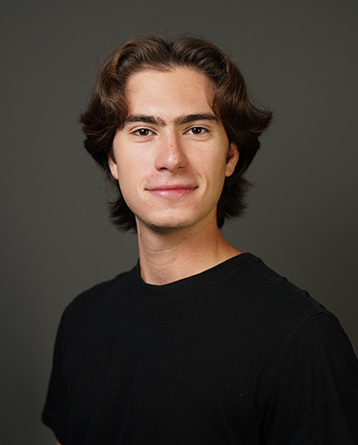
Ufuk Kilinc
Undergraduate Student
Materials Science and Engineering, Biomedical Engineering