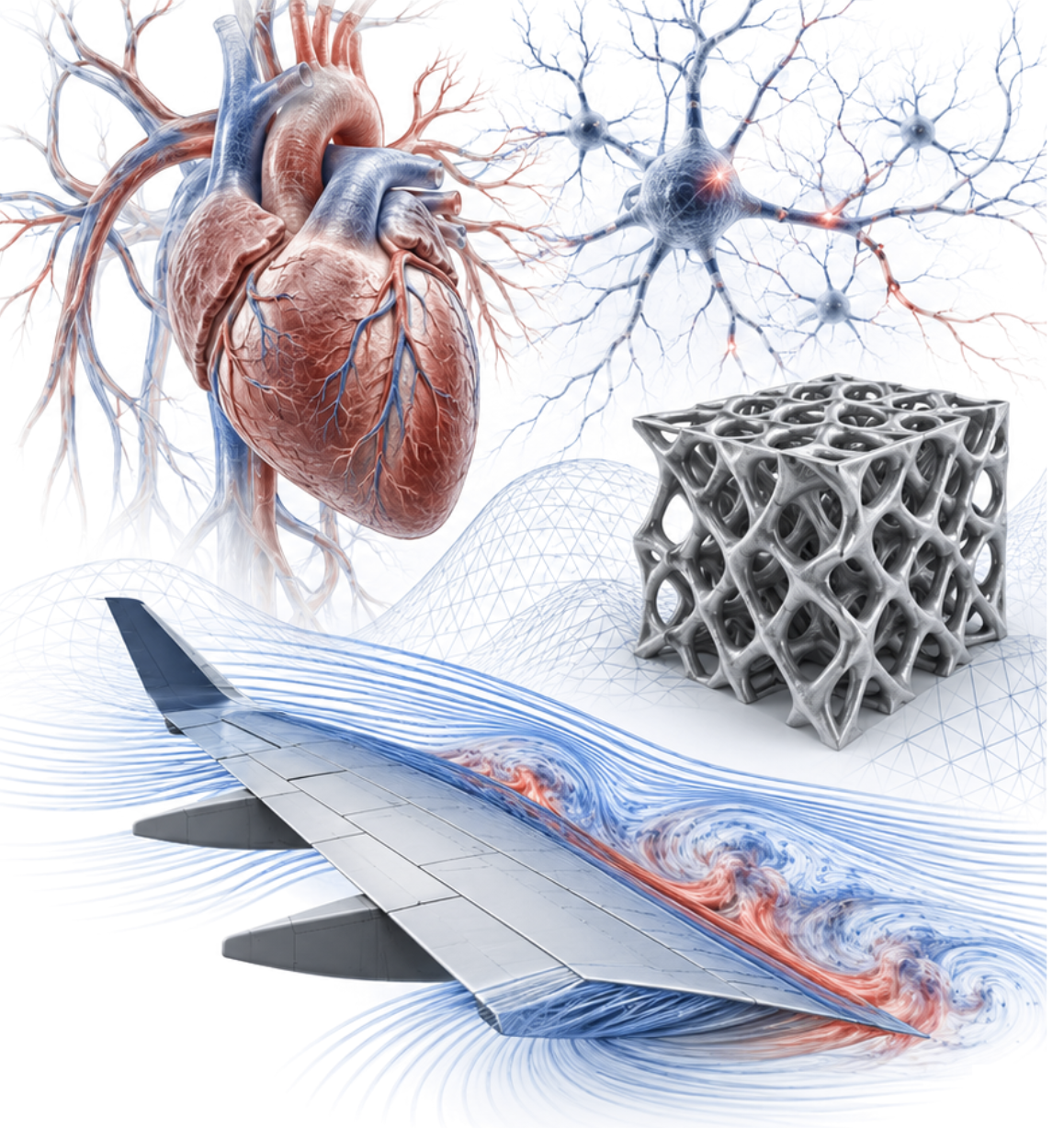
Carnegie Mellon University's Digital Twin for Complex Engineering Systems Initiative is developing a new generation of trustworthy, adaptive Physics-AI Digital Twins for complex engineering and biomedical systems.
By fusing governing physical laws with scientific machine learning, artificial intelligence, and real-time data streams, researchers are moving beyond static, single-use digital twins. The initiative aims to create universal, transferable foundation models that continuously learn from multimodal data, quantify uncertainty, predict system behavior, and support real-time decision-making across diverse domains.
Core research pillars
Physics-AI foundation models:
Fusing mechanistic physical equations with data-driven AI for fast, accurate modeling
Real-time adaptive digital twins:
Continuously updating models using live-streaming observational and sensor data
Trustworthy AI & uncertainty quantification
Ensuring all predictions are interpretable, verifiable, and reliable for high-stakes decisions
Autonomous prediction & control:
Supporting closed-loop decision-making, mission planning, and automated system control
Research objectives
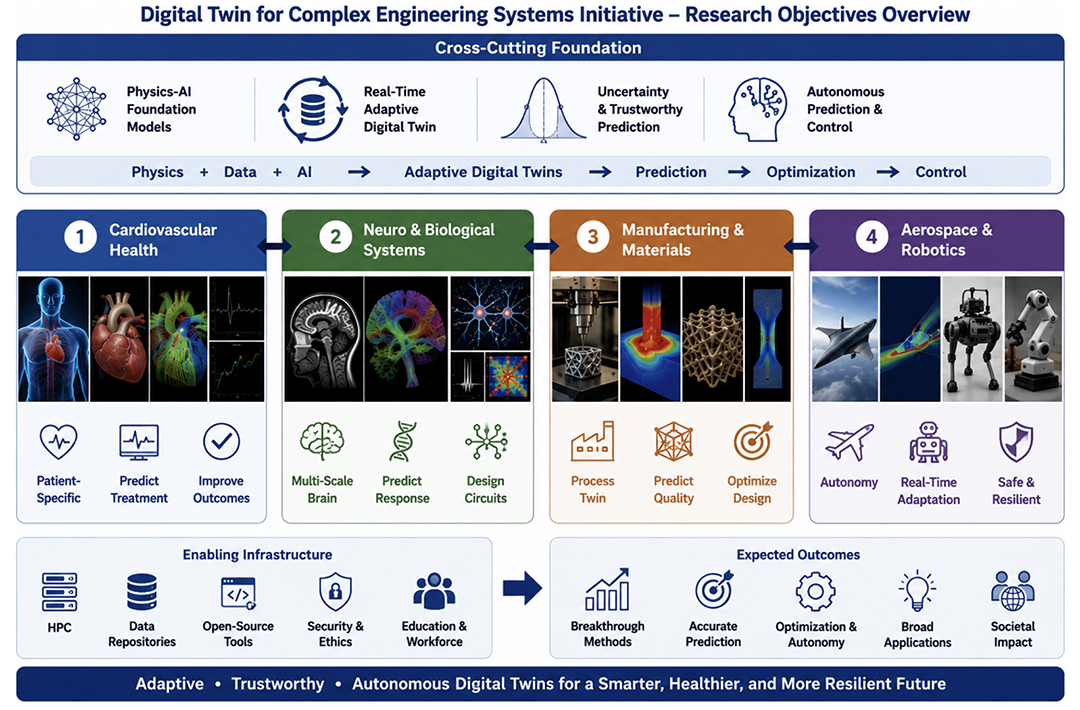
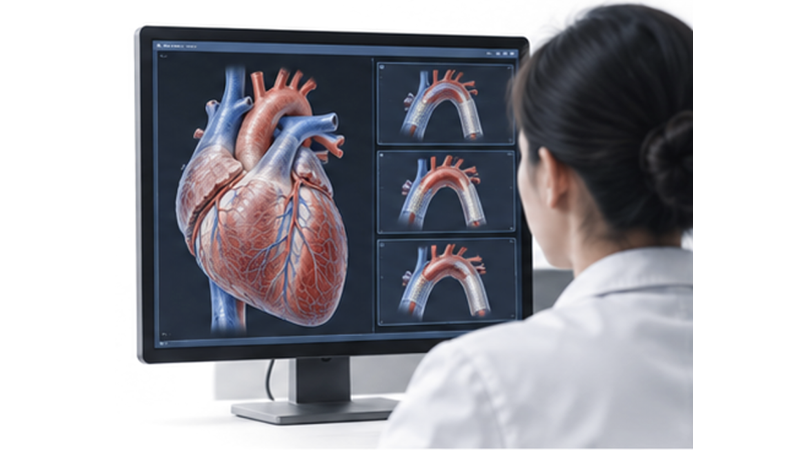
1. Patient-specific cardiovascular digital twins
Combining individual patient data with physics-based cardiovascular models to deliver precision, personalized healthcare.
- Observations: Medical imaging and real-time physiological measurements
- Digital twin: Multiscale cardiovascular dynamics updated continuously with patient-specific data
- Decision support & impact: Predict disease progression, compare surgical/treatment interventions, and evaluate clinical outcomes under quantified uncertainty
- Collaborators: University of Pittsburgh's Center for Military Medicine Research, UPMC, Mayo Clinic, Iowa State University
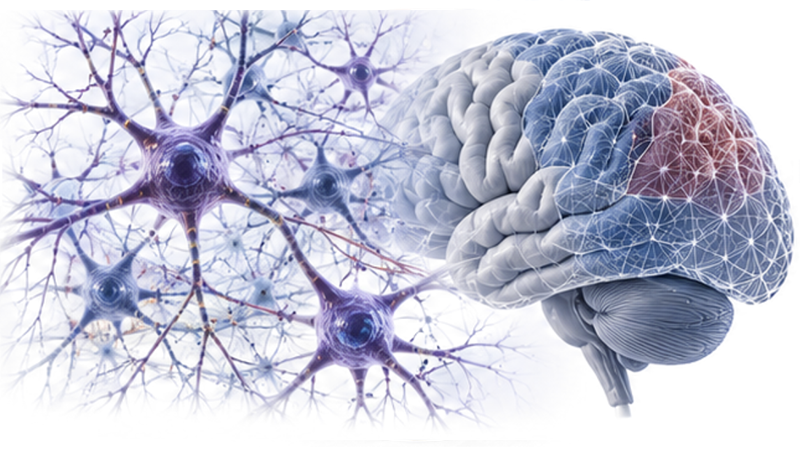
2. Neurological & biological circuit digital twins
Bridging scales from genes and cells to tissue and organ systems to study complex neurological conditions and engineer biological circuits.
- Observations: Multimodal clinical and experimental biological data
- Digital twin: Mechanistic neural models connecting cellular dynamics, network activity, and system function
- Decision support & impact: Explore disease mechanisms for conditions like Alzheimer’s, Parkinson’s, and epilepsy, while accelerating the rational design and optimization of synthetic biological networks
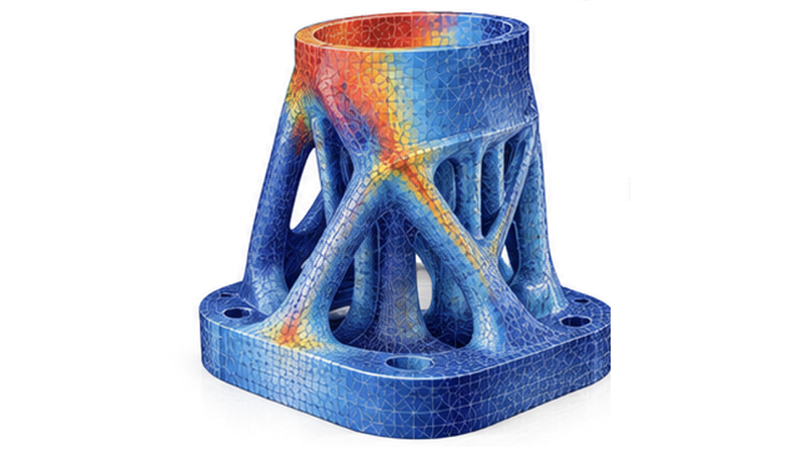
3. Intelligent manufacturing & advanced materials
Connecting process conditions to material structure and performance using multiphysics modeling, in-situ sensing, and generative AI.
- Observations: Live in-situ sensor streams and material characterization
- Digital twin: Coupled process, material, and structural models
- Decision support & impact: Real-time defect prediction, dynamic process control, supply network optimization, and accelerated inverse design of novel and mechanically programmable materials
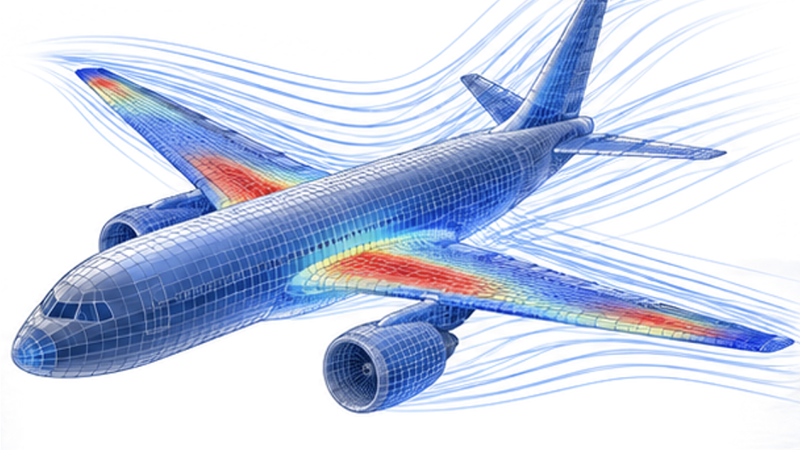
4. Autonomous Aerospace, Maritime & Robotic Systems
Enabling intelligent systems to safely adapt and operate in dynamic, extreme, or uncertain real-world environments where low latency is critical.
- Observations: Real-time sensor streams and rapidly changing operational conditions
- Digital twin: Integrated aerodynamic/fluid, structural, propulsion, and control models
- Decision support & impact: Rapid anomaly detection, automated mission planning, and autonomous adaptation for high-speed aerospace vehicles, maritime platforms, and collaborative robotics